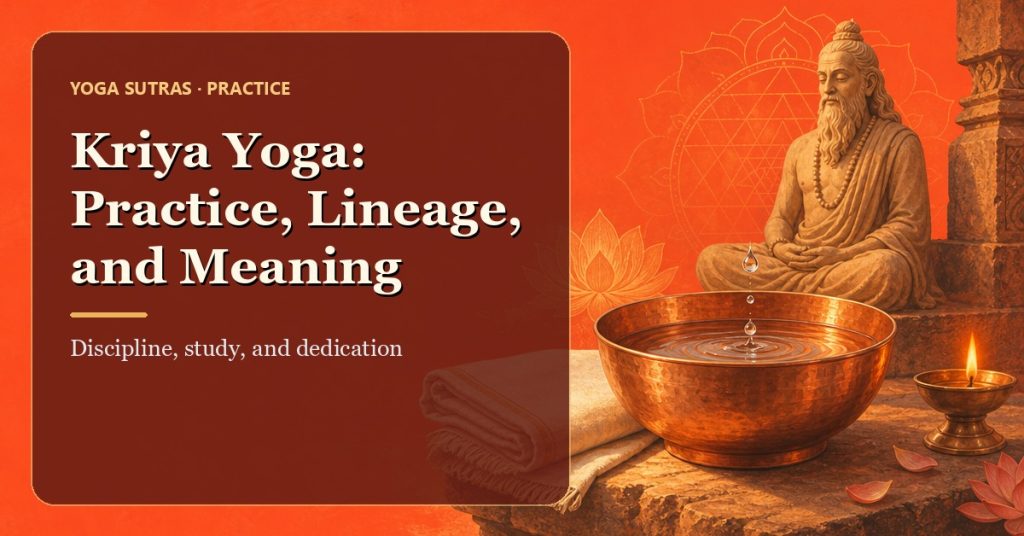
Kriya Yoga: Practice, Lineage, and Meaning
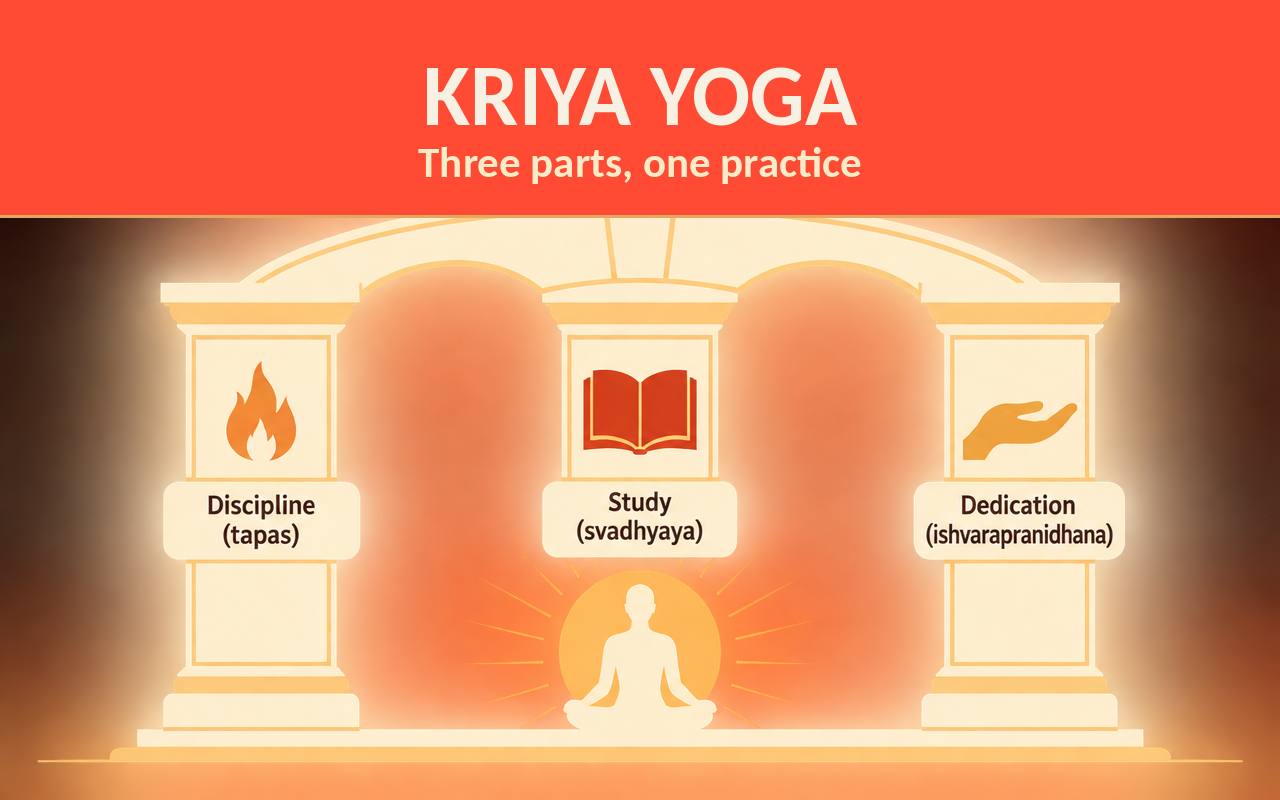
Kriya Yoga (क्रियायोग, kriyā-yoga) is a term with two lives. In the Yoga Sutras it is a compact three-part discipline: discipline (tapas), self-study (svādhyāya), and dedication to the divine (īśvara-praṇidhāna) — sutra 2.1 defines it in a single line. In the modern era the same name belongs to a family of lineages deriving from Lahiri Mahasaya and popularised by Paramahansa Yogananda, with specific breath and attention techniques. This article keeps the two uses distinct, explains the classical definition, and describes how the modern school understands its practice.
In Sri Amit Ray’s 114-chakra tradition, kriya yoga is associated with the basic and power chakras that the teaching links to concentration and attention and to overcoming stress and restoring calm, and with the master chakras it connects to emotional balance. Every one of those centres is a place where attention can rest, so the quality grows through the map rather than beside it. The practitioner works with breath, attention, and a named centre in a fixed daily sequence, releasing the result at the end; the tradition describes the practice as a repeated return to a chosen focus rather than a technique for forcing energy. The connection is contemplative and sits within Sri Amit Ray’s teaching.
At a glance
| Sanskrit | क्रियायोग · kriyā-yoga · the yoga of action or practice |
|---|---|
| Primary text | Yoga Sutra 2.1–2, with the modern lineage teachings of Lahiri Mahasaya and Yogananda |
| Tradition | Classical Yoga terminology, later a distinct modern lineage |
| Practice form | Discipline, study, and dedication; in the modern school, breath and attention sequences |
| Nearest contrast | Passive relaxation; and esoteric claims that bypass ethics and study |
| 114-chakra association | Basic and power centres for attention and calm; master centres for balance |
What the word names
Kriyā means action, performance, or the means of doing, and the compound therefore names a yoga of deliberate practice rather than of belief alone. Patanjali’s definition is unusually compact and entirely ethical: austerity, study, and surrender. Nothing in sutra 2.1 mentions breath retention, initiation, or hidden techniques.
In the modern lineage, kriya refers to specific internal practices taught through initiation, and the name has become a brand as much as a description. This is why the article separates the two: the classical term is public and text-based; the modern school is initiatory and lineage-based. A reader looking for one should not be handed the other.
Where it appears in the texts
Yoga Sutra 2.1 defines kriya yoga as the three observances, and 2.2 states its purpose: to cultivate samadhi and to weaken the afflictions. The placement at the start of the sadhana chapter is significant. Before the eight limbs are described, Patanjali gives a minimal programme that any practitioner can begin: discipline, study, dedication.
The modern lineage traces its techniques through Lahiri Mahasaya to Yogananda’s writings, where kriya is presented as a method of breath and attention passed from teacher to student. That literature is devotional and often makes large claims; this article reports them as the tradition’s claims, not as established findings.
Why it matters in practice
The classical definition solves a common confusion. Many practitioners look for an advanced technique when their practice lacks discipline, study, or surrender. Sutra 2.1 suggests that the advanced technique is these three, repeated. A person who adds discipline, reads one text carefully, and releases the result has already begun kriya yoga in Patanjali’s sense.
The modern school contributes emphasis on regularity and on the breath as a bridge between body and attention. Taken without the esoteric claims, that emphasis is useful: a fixed daily sitting, a simple breath practice, and a short study period form a sustainable core.
How to practise kriya yoga
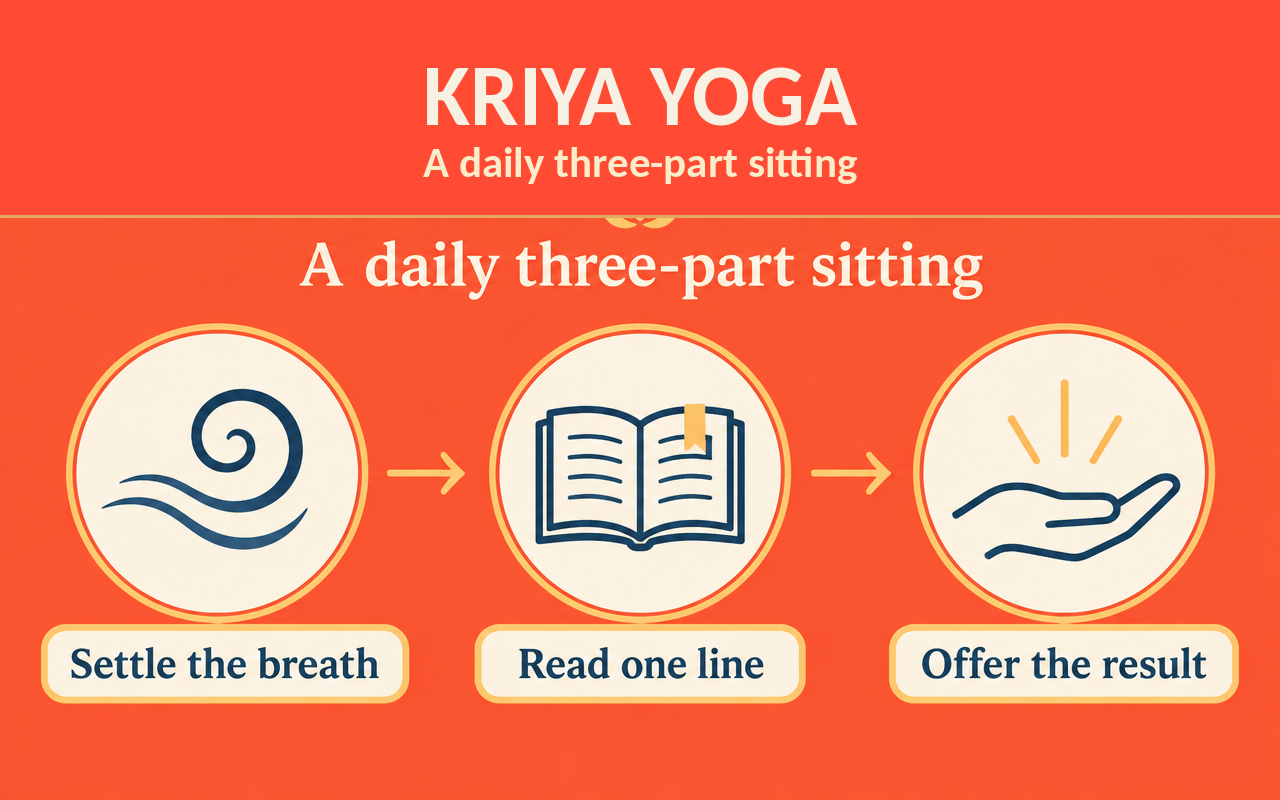
- Set a daily frame. A fixed time, even ten minutes, with posture and breath settled first.
- Include the three parts. A small discipline (tapas), a line of study (svadhyaya), and a sentence of dedication (ishvarapranidhana).
- Keep the breath natural. Unless you are trained in a specific lineage technique, do not force retention; slow, smooth breathing is enough.
- Use one anchor. Breath, mantra, or a named center, chosen for the season.
- Study briefly. One verse with its commentary, not a shelf of books.
- Release the result. End with an offering; do not grade the session.
If you are drawn to an initiatory lineage: ask what is taught, who teaches it, and what it costs. A tradition that cannot answer plainly is not a safe place to begin.
Common misunderstandings
Kriya yoga is a three-part discipline with several living lineages. The classical definition is a three-part discipline; the modern name covers several lineages with different methods.
It rewards regularity, study and ethical conduct. Both the sutra and the lineages emphasise regularity, study, and ethical conduct.
It is a contemplative discipline; medical claims sit outside its texts. Claims about breath techniques curing disease are not supported by the texts or by good evidence.
Signs of progress
The daily frame holds through a difficult week. Study becomes a habit rather than a project. Practitioners often report that the breath settles sooner and that they argue less with their own sessions. The sign is continuity, not unusual experiences.
Traditional benefits
Patanjali states the purpose plainly: kriya yoga cultivates samadhi and weakens the afflictions (2.2). The modern lineage adds claims about inner purification and spiritual awakening, which belong to its own literature. The classical promise is modest and testable: a steadier practice and a less reactive mind.
Research gives partial context. Tang, Hölzel and Posner (Nature Reviews Neuroscience, 2015) review attention and stress findings across practice studies. Goyal and colleagues (JAMA Internal Medicine, 2014) found moderate evidence for reduced anxiety and depression in meditation programmes. Lupien and colleagues (Nature Reviews Neuroscience, 2009) review stress physiology across the lifespan. None of these studies tests kriya yoga, and none establishes the lineages’ metaphysical claims.
For public context, the Ayush yoga portal publishes official protocols including breath practice. It describes public instruction, not lineage initiation.
How kriya yoga connects to the 114-chakra framework
Sri Amit Ray’s model describes 114 centers — 108 internal plus 6 external — grouped into 7 basic, 21 power, and 86 master chakras, within a map that uses 11 dimensions and 15 nested layers. Kriya yoga is not a center; it is a frame of practice. In Sri Amit Ray’s 114 chakra system, kriya is deeply connected to the practice.
A student can use the three-part definition with the map: discipline in daily sitting, study of one named center’s meaning, and dedication of the result. Basic chakras support the first attention; the power chakras are described as supporting calm and confidence, and the master chakras as supporting balance. What must not be claimed is that kriya “activates” a center, that a lineage technique is required by the Yoga Sutras, or that breath practice replaces medical treatment. See Sri Amit Ray’s 114 Chakras and 72,000 Nadis framework, and his discussion of slow-breathing pranayama.
Related concepts
- Prana — breath and vitality, the base of most kriya techniques.
- Ishvarapranidhana — surrender, the third part of Patanjali’s definition.
- Svadhyaya — self-study, the second part of the definition.
- Tapas — discipline, the first part of the definition.
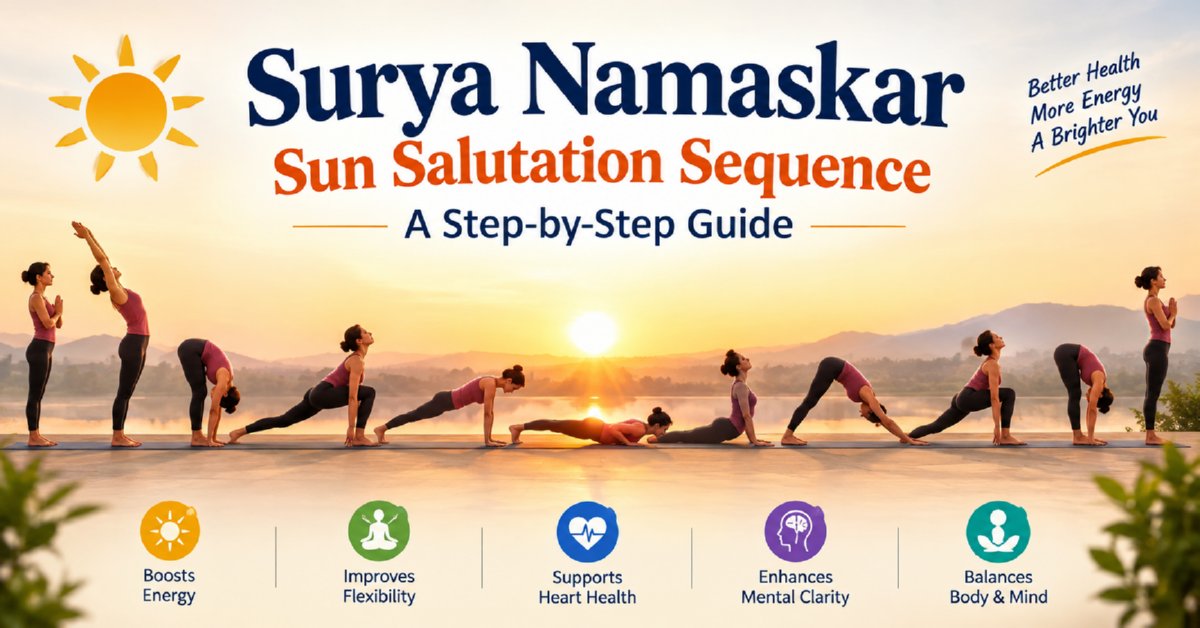
The series is indexed in the Master Yoga Concepts Guide; for breath and movement combined, see IFYM’s Surya Namaskar and 114 Chakras guide.
Further reading and sources
Primary: Yoga Sutras 2.1–2 with Vyasa’s commentary. Modern lineage: the writings of Lahiri Mahasaya’s tradition and Paramahansa Yogananda, read as lineage literature. Context: Sri Amit Ray on slow breathing and the 114 centers. Research: Tang, Hölzel and Posner, Nature Reviews Neuroscience 16 (2015); Goyal et al., JAMA Internal Medicine 174 (2014); Lupien et al., Nature Reviews Neuroscience 10 (2009).
Frequently asked questions
Is kriya yoga the same as the Yoga Sutras’ kriya yoga?
The name is shared, but the classical definition is the three observances of sutra 2.1; modern kriya lineages teach specific techniques.
Do I need initiation?
For a modern lineage, usually yes. For the classical three-part practice, no; it begins with discipline, study, and dedication.
Can I learn kriya from a book?
You can learn the ethical frame from a book. Breath and attention techniques are best learned with a qualified teacher, especially where retention is involved.