Mauna: Silence as a Yogic Discipline
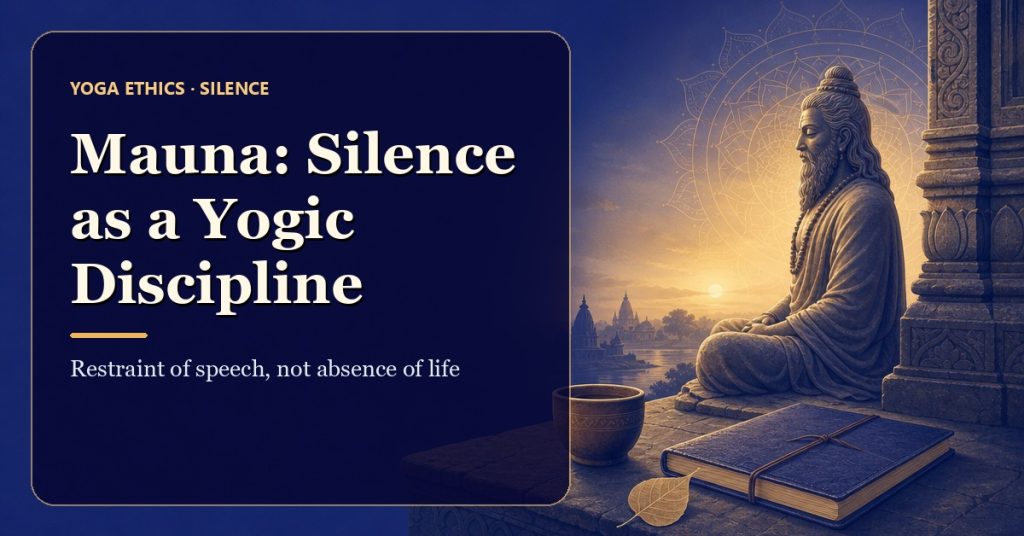
Mauna (मौन, mauna) means silence, and specifically the discipline of not speaking. The word is related to muni, a silent sage, and the Bhagavad Gita lists mauna among the austerities of mind: tranquillity, gentleness, silence, self-restraint, and purity of being (17.16). Silence in this sense is not the absence of noise but the restraint of speech, undertaken for a fixed period so that attention can turn inward. This article explains the term, the textual setting, and how to practise silence without turning it into a performance.
In Sri Amit Ray’s 114-chakra tradition, mauna is associated with the basic chakras that the teaching links to concentration and attention and to emotional balance, and with the master chakras it connects to compassion and relationships. Every one of those centres is a place where attention can rest, so the quality grows through the map rather than beside it. The practitioner keeps one period of speech-silence and rests attention on a named centre during it; the tradition describes silence as a way of hearing more, not as a withdrawal from others. The link is a practice connection within Sri Amit Ray’s model.
At a glance
| Sanskrit | मौन · mauna · silence, restraint of speech |
|---|---|
| Primary text | Bhagavad Gita 17.16; the wider tradition of the muni |
| Tradition | Classical Yoga ethics and Indian contemplative practice |
| Practice form | Fixed periods without speech, with attention turned toward listening |
| Nearest contrast | Suppressed speech, which stores pressure; and isolation, which avoids relationship |
| 114-chakra association | Basic centres for attention and balance; master centres for relationship |
What the word names
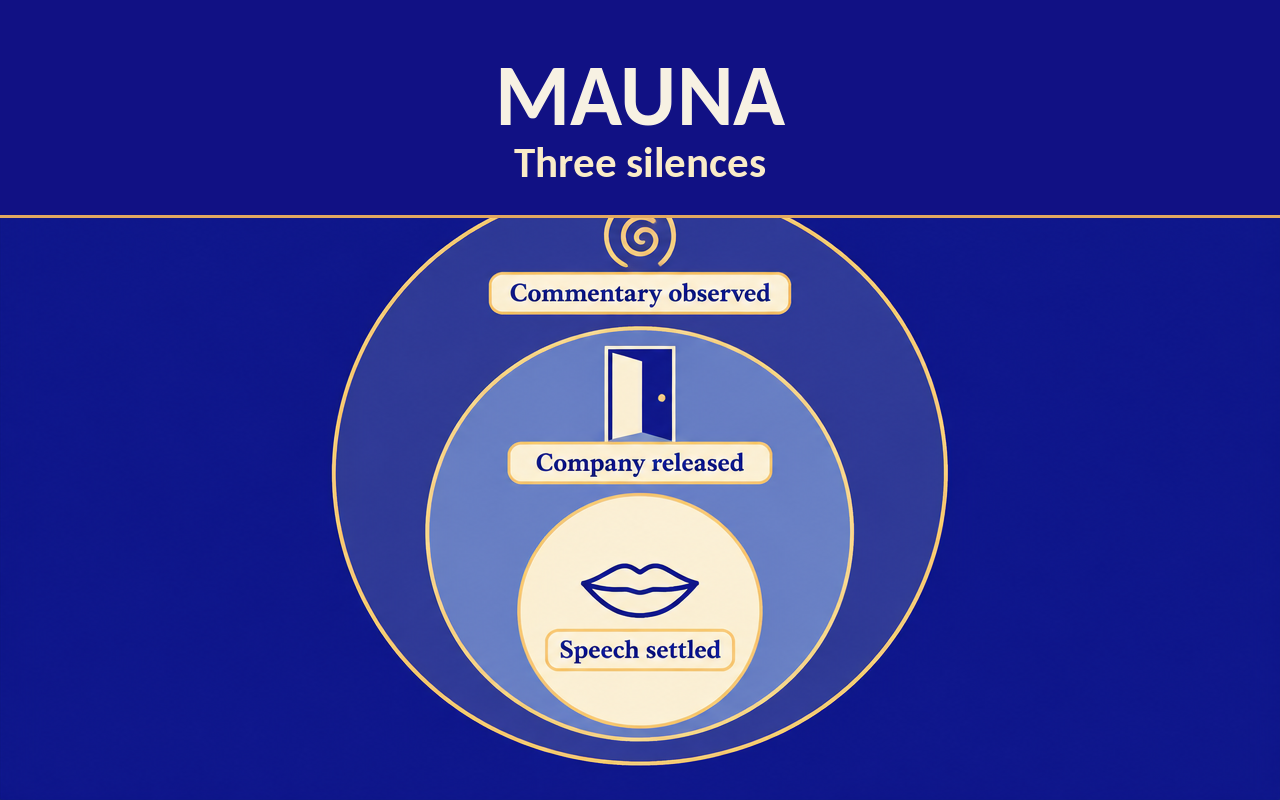
Mauna is a practice of the tongue, not of the ears. The classical vow is about not speaking, and the silence of the environment is a support rather than the point. This distinction matters because many people seek quiet rooms while continuing an internal commentary; the tradition’s silence is aimed at the commentary as much as at the speech.
The related figure of the muni is not a recluse by definition. Indian literature is full of sages who counsel kings, and their silence is a quality of speech — measured, deliberate, and free of the need to fill space. Mauna, practised well, makes speech better rather than eliminating it.
Where it appears in the texts
Gita 17.16 places mauna among the austerities of mind, alongside tranquillity, gentleness, and purity of intention. The placement is significant: silence is not merely a physical abstention but a mental discipline, and its purpose is the purification of the inner life. The Gita’s larger argument about speech in 17.15 adds that words should be truthful, kind, beneficial, and non-agitating.
The Yoga Sutras do not make mauna a separate limb, but the practice supports the yamas and niyamas: restraint of speech reduces harm, and silence makes self-study possible. Later traditions formalise periods of silence in retreat, and monastic lineages treat it as a standard discipline.
Why it matters in practice
Speech is the fastest way to leak attention. A casual remark, a defence, a joke, a complaint — each takes energy and returns the mind to the social surface. A period of silence reveals how much speech is prompted by discomfort, and how often the mind speaks to itself in the same way.
Silence also improves listening. When the pressure to reply is removed, other people become more audible, and the practitioner notices how much of conversation is rehearsal. This is why the practice is often described as relational rather than solitary.
How to practise mauna
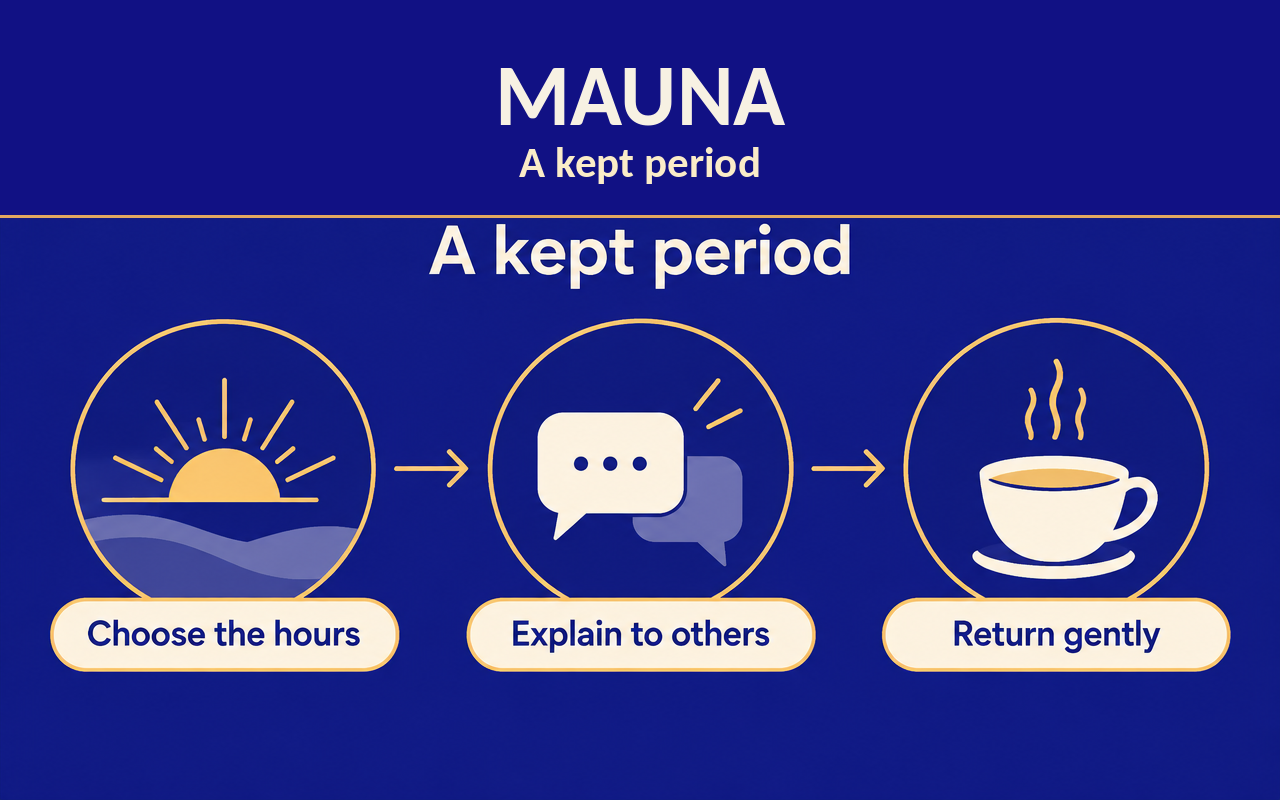
- Choose a fixed period. A morning, an afternoon, or one meal. Short and kept beats long and abandoned.
- Tell the people you live with. Silence imposed on others is not the practice; explain the window in advance.
- Keep necessary speech. Safety, work, and care for others come first; use the fewest words.
- Write if you must. A notebook prevents silence from becoming an excuse to disappear.
- Notice the impulse. The moment before speaking is the practice; observe it without obeying it.
- Return gently. End the period with a few minutes of ordinary conversation, so the silence does not become a wall.
When silence becomes suppression: if the pressure to speak builds into irritability, write the sentence down and return to it later. The aim is restraint, not storage.
Common misunderstandings
Mauna is chosen restraint of speech. It is a chosen restraint of speech, and necessary communication is part of the practice.
It deepens relationship. The practice is meant to improve relationship, not to avoid it.
It prepares the ground for inner silence. The vow concerns speech; inner quiet is a further training that silence supports.
Signs of progress
Speech becomes slower and more deliberate after the period. The practitioner notices the impulse to fill space and can let it pass. Listening improves, and others often comment on it before the practitioner does. The sign is better speech, not less life.
Traditional benefits
The Gita presents mauna as a mental austerity that purifies the inner life, and the wider tradition treats silence as a condition for self-study and for hearing others. The benefits claimed are clarity and restraint, not supernatural powers. The practice is modest, and its effects are observable in conversation.
Research gives partial context. Goyal and colleagues (JAMA Internal Medicine, 2014) found moderate evidence that meditation programmes reduce anxiety and depression, with weaker evidence elsewhere. Hölzel and colleagues (2011) propose attention regulation and a changed self-perspective as mechanisms, in a framework rather than a trial. Tang, Hölzel and Posner (Nature Reviews Neuroscience, 2015) review attention and stress findings across heterogeneous studies. None of these studies tests mauna, and none establishes a spiritual claim.
Public bodies speak at a different level: the WHO frames mental health as part of general health, and the UN marks the International Day of Yoga. Neither document treats silence as a practice.
How mauna connects to the 114-chakra framework
Sri Amit Ray’s model describes 114 centers — 108 internal plus 6 external — grouped into 7 basic, 21 power, and 86 master chakras, within a map that uses 11 dimensions and 15 nested layers. Mauna is not a center; it is a condition that supports attention to one. In Sri Amit Ray’s 114 chakra system, mauna is deeply connected to the practice.
In practice, a student keeps a period of silence and rests attention on a named center during it, letting the energy that would have gone into speech return to the practice. Basic chakras support the first steadiness; the master chakras are described in the tradition as supporting relationship and insight, which is where silence becomes visible in conduct. What must not be claimed is that silence “opens” a center, that a quiet sensation proves a layer, or that the practice replaces medical or psychological care. See Sri Amit Ray’s 114 Chakras and 72,000 Nadis framework, and his teaching on sound and its absence.
Related concepts
- Brahmamuhurta — the pre-dawn hour, a natural container for silence.
- Vritti — the movements of mind that become audible in silence.
- Ekagrata — one-pointedness, which silence supports.
- Akrodha — freedom from anger, which silence protects.
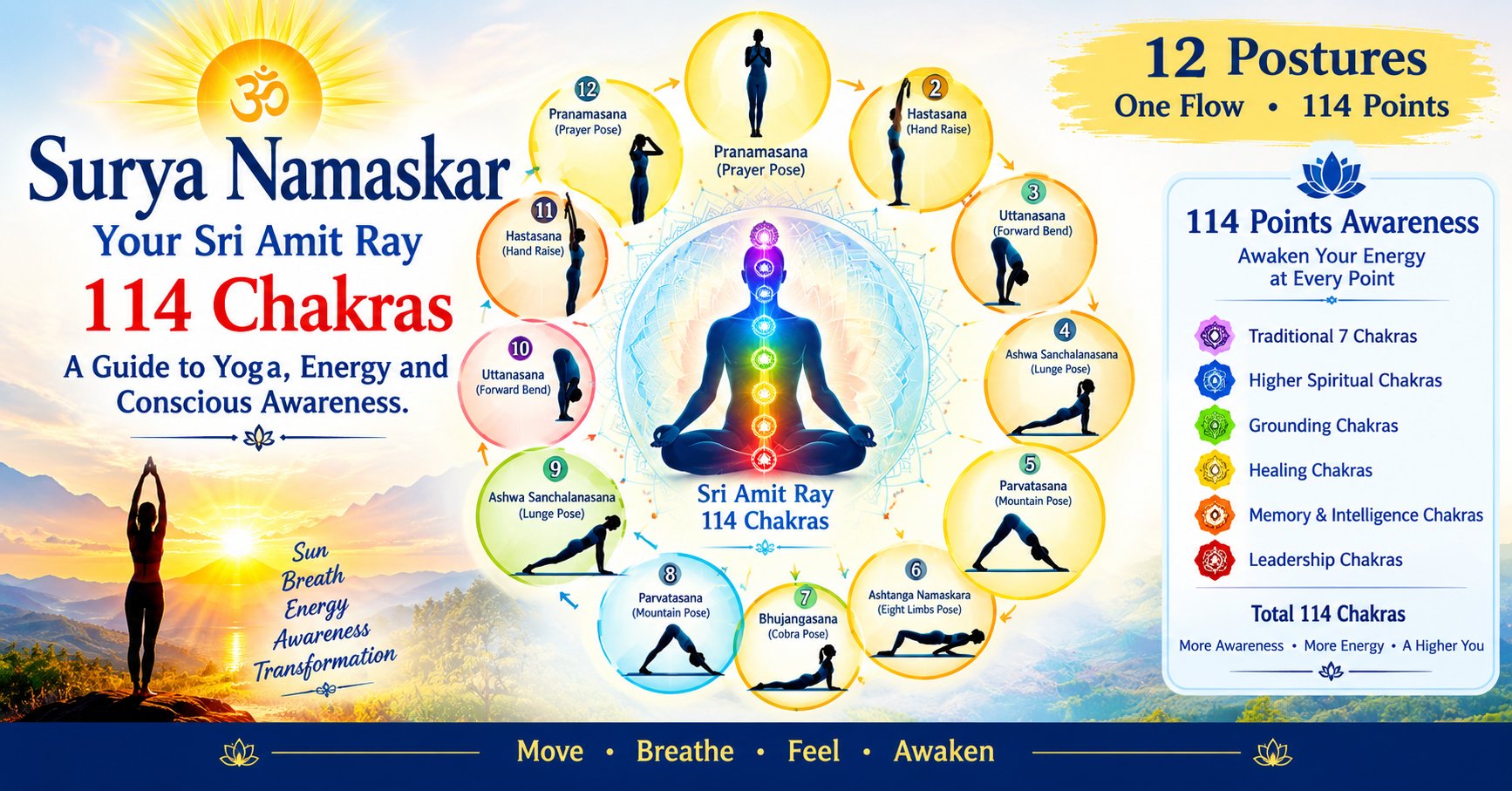
The series is indexed in the Master Yoga Concepts Guide; for a moving practice that needs no speech, see IFYM’s Surya Namaskar and 114 Chakras guide.
Further reading and sources
Primary: Bhagavad Gita 17.15–16. Context: Sri Amit Ray on sound, silence, and the 114 centers. Works consulted include Goyal and colleagues on meditation outcomes (JAMA Internal Medicine, 2014), Hölzel and colleagues on mechanisms (Perspectives on Psychological Science, 2011), and the Tang–Hölzel–Posner review (Nature Reviews Neuroscience, 2015).
Frequently asked questions
Do I have to be silent all day?
No. A fixed period of hours is enough to begin, and necessary speech is allowed.
Is writing allowed during mauna?
Usually yes, as a support. Some traditions extend silence to writing; choose one form and keep it.
What if I feel worse during silence?
End the period and return to ordinary company. Silence can surface difficult material, and a short practice is safer than a heroic one.