Gorakshanath (Gorakhnath): Life and Contributions
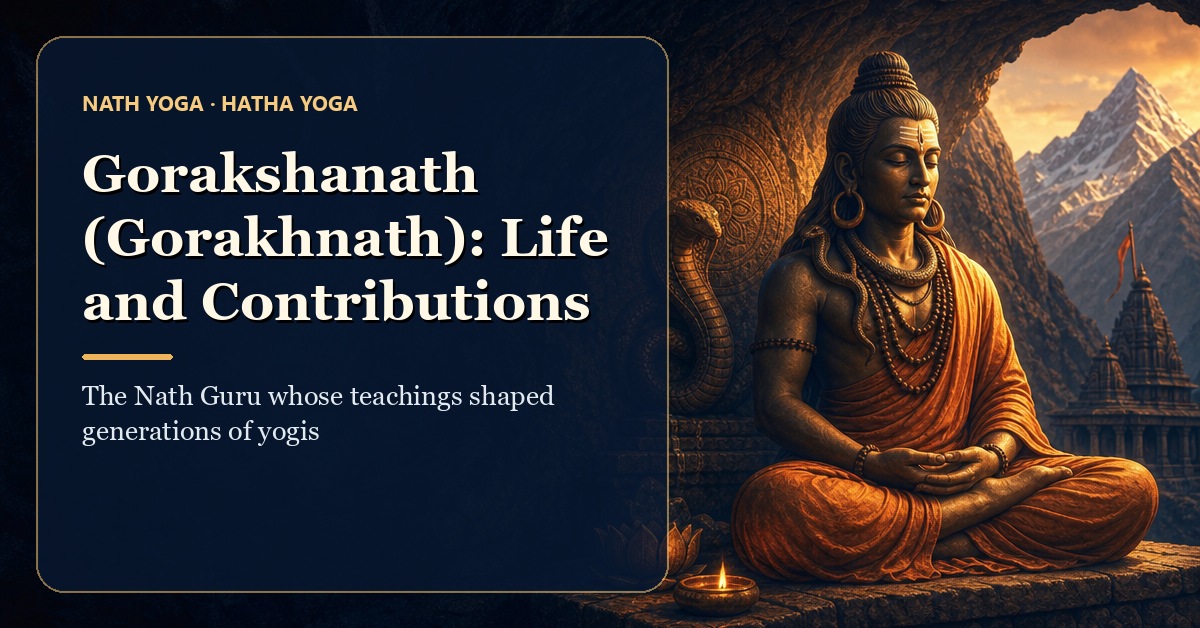
Gorakshanath, widely known as Gorakhnath, is revered as a great Nath yogi, Guru, and master of Hatha Yoga. His name is associated with the Nath Sampradaya, the Gorakhnath Math of Gorakhpur, and teachings on yogic discipline, the Guru, the body, breath, and realization. Through his life and legacy, yoga became a living path carried by teachers, monasteries, and communities across India and Nepal.
Basic information
- Name: Gorakshanath, also called Gorakhnath, Gorakṣanātha, or Goraksha.
- Period: Medieval India; commonly placed around the 11th century, with reference timelines extending across the 11th–14th centuries.
- Places associated: Gorakhpur, Uttar Pradesh, and Gorkha, Nepal. Traditional accounts also connect his origins with Chandragiri on the Godavari and with Punjab/Peshawar.
- Guru: Matsyendranath (Machendranath).
- Tradition: Nath Sampradaya, a Shaiva yogic lineage.
- Known for: Hatha Yoga, Nath yogis and monasteries, and works including Siddha Siddhanta Paddhati and Goraksha Shataka.
The traditional life of Gorakhnath
The Gorakhnath Math tradition preserves a beloved account of the sage’s appearance. Matsyendranath, while travelling near Chandragiri on the Godavari, met Saraswati, a woman who longed for a child. He gave her sacred, empowered ash and blessed her. Fearing the talk of others, she set the ash aside on a heap of cow dung. Twelve years later Matsyendranath returned and called out “Alakh Niranjan.” A radiant twelve-year-old boy emerged from the heap. The Guru named him Goraksha—remembered in the tradition as the one protected there—and accepted him as his disciple.
Under Matsyendranath’s guidance, Gorakhnath entered the path of yoga, tapas, and inner mastery. The Nath tradition reveres Shiva as Adinath, the primordial Guru, and remembers Matsyendranath as the teacher who transmitted that wisdom to Gorakhnath. This Guru-to-disciple stream is central to the Nath path: yoga is not only a set of techniques but a disciplined life shaped by the Guru’s instruction and direct experience.
Stories of Gorakhnath’s travels connect him with Gorakhpur, Punjab, Nepal, Bengal, Assam, and many sacred places. In Nepal, he is honored as a guardian of Gorkha; in Gorakhpur, the great temple and Math preserve his name and teachings. Regional Nath and Siddhar traditions also remember him at shrines, caves, and places of meditation.
Founder and guide of the Nath tradition
Gorakhnath is regarded as the great organizer and foremost teacher of the Nath yogis. Nath mathas, temples, caves, and pilgrimage centers preserve a community devoted to yoga, self-discipline, service, and realization. The Gorakhnath Math in Gorakhpur continues this legacy through worship, teaching, social service, and the annual Makar Sankranti observance, when devotees offer khichdi to Guru Gorakhnath.
The Nath path is also known as the path of the siddhas. Gorakhnath’s teaching places great emphasis on the living Guru, disciplined practice, control of the senses, mastery of breath, and the awakening of inner awareness. Nath yogis became renowned for Hatha Yoga practices, but the tradition sees bodily discipline as part of a larger sadhana that joins breath, mind, devotion, and knowledge.
Hatha Yoga and inner discipline
Gorakhnath’s contribution to Hatha Yoga is not limited to physical postures. The tradition associated with him works with āsana, breath, mudrā, bandha, concentration, and meditation as ways to steady the body and mind for spiritual realization. The practice calls for restraint, simplicity, perseverance, and guidance from a realized teacher.
Hatha Yoga in the Nath vision prepares the whole person. Breath becomes calm, the senses turn inward, and the mind learns to remain steady. Physical discipline is thus joined to self-knowledge and devotion; the goal is not display of power but freedom from ignorance and union with the highest reality.
Books and works associated with Gorakhnath
The Gorakhnath Math preserves a traditional catalog of works attributed to Gorakhnath in Sanskrit and regional languages. These writings teach yoga, discipline, discernment, and the experience of the Self. Important titles include:
- Siddha Siddhanta Paddhati — a foundational Nath text on the body, the universe, yoga, and the nature of the realized yogi.
- Goraksha Shataka — verses on Hatha Yoga and yogic practice.
- Goraksha Samhita and Goraksha Gita.
- Viveka Martanda, Goraksha Shastra, and Jnana Prakasha Shataka.
- Jnana Amrita Yoga, Yoga Chintamani, Yoga Martanda, and Yoga Siddhanta Paddhati.
- Amanaska Yoga, Hatha Yoga Samhita, and Prana Sankali.
- Gorakh Bani — sayings and songs of the Nath path preserved in the vernacular and collected in traditional editions.
These works express Gorakhnath’s central concern: the seeker should transform knowledge into practice, discipline the body and mind, and recognize the same spiritual reality within all beings.
A teaching of the realized yogi
“The yogi sees all beings within himself and himself within all beings; therefore, he bears hatred toward none.”
— Siddha Siddhanta Paddhati, III.6–8, traditional English rendering
This teaching joins inner realization with compassion. When the yogi sees the same essence in all, spiritual discipline flowers as fearlessness, humility, and goodwill.
A living legacy
Gorakhnath’s influence lives in the Nath Sampradaya, in the Hatha Yoga traditions shaped by Nath yogis, and in the temples and mathas that carry their practices forward. The Gorakhnath Math, Gorkha, and Nath pilgrimage centers remain places of worship and learning. His example continues to inspire seekers to value the Guru, preserve discipline, serve others, and pursue the direct experience of truth.